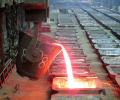
The Indian government has approved a Rs 2,814 crore capital expenditure support scheme to promote domestic processing of critical minerals like lithium and nickel. This five-year scheme, running until 2030-31, aims to reduce import dependence, develop value chains, and enhance India's self-reliance in essential materials for clean energy and modern technologies. It includes a 30% capital subsidy for setting up processing plants.
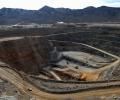
Union Mines Minister G Kishan Reddy announced that the Indian government is intensifying its support for private mining entrepreneurs seeking critical mineral opportunities abroad, working with the Ministry of External Affairs and appointing mineral officers in embassies to facilitate these efforts.
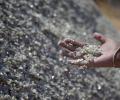
Hyderabad-based Midwest Ltd has become the first Indian private company to secure overseas critical mineral mines, sealing a deal with Indonesia's state-run PT Perusahaan Mineral Nasional (PERMINAS) to ensure a long-term supply of rare earths.

A readout by the US said the agreement marked a milestone in the strategic partnership between the two nations to ensure that the foundational elements required for advanced technology and energy are available within trusted networks.

Prime Minister Narendra Modi addressed the ASEAN-India summit, advocating for a free, inclusive, and rules-based Indo-Pacific based on cooperation. He proposed nine initiatives, including a long-term maritime plan, free e-visas, and cooperation in civil nuclear energy, emphasizing India's commitment to ASEAN's unity and centrality amidst global uncertainties.
India is planning to amend the Mines and Minerals (Development and Regulation) Amendment Act 2023 to specify the use of funds currently earmarked at 5,600 crore for exploring critical mineral mines overseas, according to a top official. The proposed amendments also aim to introduce a tailings policy and modify the royalty structure to facilitate the extraction of critical minerals from waste materials, the official added.
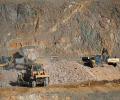
The Centre has increased the area granted to individual players by more than four fold in order to boost mining of critical minerals. Issuing an order on Tuesday, the government said, for mining leases, the area has been expanded from the current limit of 10 sq km to 50 sq km. For prospecting licences (granted in the case of composite licence), the limit has been increased from 25 sq km to 100 sq km.
In June last year, India unveiled its first list of 29 critical minerals open for private sector exploration and mining. Since then, 38 critical mineral blocks have been auctioned, but only 14 - less than 37 per cent - have found bidders. This modest achievement was secured only after the Centre conducted a second round of auctions when the first round fell flat, failing to attract the minimum required bidders.
The government on Tuesday proposed to launch a mission to give fillip to the domestic output of critical minerals like copper and lithium, their recycling as well as acquisition of such assets abroad. Presenting Union Budget for 2024-25, Finance Minister Nirmala Sitharaman also said the government will launch the auction of the first round of offshore mining blocks.

India has prohibited the export of lithium-ion battery black mass to bolster domestic recycling capabilities and enhance the recovery of critical minerals like lithium, cobalt, nickel, and manganese. This move aims to ensure feedstock availability for local recyclers, reduce import dependence, and strengthen supply chains for electric vehicles and clean energy technologies, aligning with the Aatmanirbhar Bharat vision.

India has banned the export of lithium-ion battery black mass with immediate effect to ensure domestic availability of critical minerals and strengthen its battery recycling industry. This move aims to address the underutilisation of domestic recycling capacity due to inadequate feedstock and reduce reliance on imports for essential minerals like lithium, cobalt, nickel, and manganese.

Finance Minister Nirmala Sitharaman on Saturday announced the removal of import duties on 12 critical minerals, lithium-ion batteries scrap, cobalt products, LED, zinc and 36 drugs for cancer and rare diseases.
In a significant move to enhance its strategic resource security, India has officially released its first-ever critical minerals list, identifying 30 key critical minerals crucial to the nation's economic growth and technological development. This pioneering step aims at reducing import dependence, enhancing supply-chain resilience, and supporting the country's net-zero objectives. Union Minister Parliamentary Affairs, Coal and Mines Pralhad Joshi, while releasing the Critical Minerals for India report in New Delhi on Wednesday, said, "India is readying for an Atmanirbhar Bharat."
India on Monday announced the results for the country's first critical mineral auction. Amid the tepid response from big players, the list of successful bidders included some lesser known names. A total of five companies secured bids for six critical mineral blocks of graphite, manganese, phosphorite, lithium, and rare earth elements with auction premiums ranging from 13.05 per cent to 400 per cent.
Following the disruption in the supply of rare earth or permanent magnets after China's notification on April 4, the mines ministry is planning to introduce a Rs 1,500 crore incentive scheme to recycle critical minerals, according to a top official.
The maiden, critical mineral auction in India has failed to enthuse the mining industry, with the first tranche achieving less than a 50 per cent success rate and the auction of several mines was cancelled owing to low response. The results, announced by the Ministry of Mines on Monday, showed that six lesser-known companies emerged as preferred bidders. Among these were Agrasen Sponge, Kundan Gold Mines, Dalmia Bharat Refractories, Sagar Stone Industries, and Maiki South Mining.
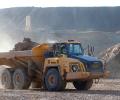
The government will put on sale around 20 critical mineral blocks in the fourth round of auction by the end of June, mines secretary V L Kantha Rao said on Monday. Rao further said that the auction process for seven critical mineral blocks put on sale in the first round is almost complete and the result would be declared in a month's time. Critical minerals such as copper, lithium, nickel, cobalt and rare earth elements are essential components in many of today's rapidly growing clean energy technologies -- from wind turbines and electricity networks to electric vehicles.

India's Indo-Pacific approach has traditionally emphasised strategic autonomy, ASEAN centrality, freedom of navigation, respect for international law and an inclusive regional order. Its growing defence and maritime partnerships with Australia, Japan, Indonesia, Vietnam and other Southeast Asian countries provide additional depth to this approach, point out Dr Kumar and Dr Jasmeet Kaur.

Prime Minister Narendra Modi's state visit to the US is expected to see discussion on India's possible entry into a US-led global alliance on critical minerals, officials told Business Standard. In June last year, the US, the European Union, and other G7 partners launched the Minerals Security Partnership to ensure that China did not further strengthen its grip on supplies of critical minerals the world over. Various ministries, including the Ministry of Finance, have communicated to the Ministry of External Affairs to explore the possibility of India joining the partnership, officials said.

Chief of Defence Staff General NS Raja Subramani highlighted on Monday how artificial intelligence, satellite-based intelligence, and mass-produced drones are fundamentally altering modern warfare. He warned that the entire geographical expanse of a nation is now a potential battlefield, making everyone vulnerable. The CDS emphasised the changing economics of warfare, the growing contest for technological superiority, and the expansion of the battle space as key determinants of future conflicts.
MiniMines Cleantech Solutions has secured an Indian patent for its Hybrid Hydrometallurgy technology, which efficiently recovers critical minerals like lithium, cobalt, and nickel from end-of-life lithium-ion batteries and electronic waste. This innovative process, developed in India, supports sustainable battery recycling and strengthens resource security for the nation's growing demand for critical minerals.
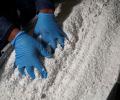
Lohum's subsidiary Vidyuta has secured government approval under the Electronics Component Manufacturing Scheme (ECMS) for a 20 KTPA cathode active material manufacturing facility, involving a Rs 500 crore investment. This initiative aims to boost domestic production of critical lithium-ion battery components, reducing import reliance and strengthening India's electronics manufacturing ecosystem.
India needs to recognise and address challenges posed by its dependence on China for critical minerals and examine the implications of phasing down coal on bank balance sheets as it accelerates its green transition, the government's Economic Survey 2023-24 tabled in Parliament on Monday said. As part of its national plan to contribute to meeting the global goal of limiting the average temperature rise to 1.5 degrees Celsius, India has committed to reducing emissions by 45 per cent below 2005 levels by 2030, achieving 50 per cent cumulative electric installed capacity from non-fossil fuel-based energy resources, and creating a carbon sink of 2.5 to 3 gigatons of CO2 equivalent through additional forest and tree cover.

Chief Economic Advisor V Anantha Nageswaran stated that 2026 marks an inflection point for India, akin to 1991, necessitating the country to become globally indispensable in carefully chosen sectors to build strategic leverage for accessing geopolitically contested resources amidst a series of external shocks.

A seven-week-old Asian elephant calf named Raja, suffering from a fractured thigh bone and multiple complications, has been airlifted from Assam to Vantara's animal hospital in Jamnagar, Gujarat. The calf, born with a complete femur fracture after being kicked by his mother, requires intensive care and specialist orthopaedic intervention to improve his chances of survival. The air transfer, supported by Anant Ambani, aims to provide advanced treatment and rehabilitation.

Top Quad leaders announced new initiatives including a maritime surveillance system, military exercise, cable connectivity, and cybersecurity partnership to strengthen cooperation in the Indo-Pacific. They also opposed destabilising actions and economic coercion, reaffirming their commitment to a free and open region.

The highlight of the successful BRICS Summit was its ability to deliver a joint statement that all members, including Iran and the United Arab Emirates, embroiled in the war in West Asia, signed.

Senior Indian officials highlight the indispensable role of the private sector in translating India-US cooperation in AI, semiconductors, quantum technologies, and critical minerals into tangible outcomes. The collaboration aims to build trusted, resilient technology ecosystems and position India as a global electronics and semiconductor hub.

Metals and mining conglomerate Vedanta aims to achieve $10 billion in group Ebitda by FY27, a significant increase from $6 billion in FY26, and plans to reduce its overall debt by more than 20,000 crore during the same period, according to CFO Ajay Goel.

One of the important topics of discussion between the two leaders is expected to be the Northern Sea Route and the Chennai-Vladivostok Maritime Corridor.

Prime Minister Narendra Modi cautioned against the 'weaponisation' of technology and critical minerals at the BRICS summit, advocating for cooperation to foster shared prosperity. Concurrently, Chinese President Xi Jinping announced plans for an open-source AI ecosystem for BRICS nations, positioning Beijing as a key technology partner amid global AI competition.
TEXMiN Foundation, IIT (ISM) Dhanbad has signed an agreement with the University of Pretoria, South Africa, for research collaboration in critical minerals, rare earth element processing, recycling, extraction technologies and advanced mining innovation.

India and Australia have signed significant agreements covering civil nuclear energy, maritime security, and critical minerals, reinforcing their partnership's role in ensuring a peaceful Indo-Pacific. The pacts facilitate uranium supply from Australia to India and enhance cooperation in defence, cyber, and critical technologies.
Indian Institute of Technology Bombay has signed a technology licensing agreement with Evergreen Lithium Recycling to improve the extraction of critical minerals from battery reprocessing, aiming to enhance efficiency and reduce costs in battery recycling operations.

US President Donald Trump has threatened the European Union with "very heavy tariffs" if he perceives their actions as hostile, specifically in response to Canada's efforts to deepen economic and strategic ties with the EU. This comes as European Commission President Ursula von der Leyen invited Canada to become the EU's first "associate member" to strengthen resilience amid global trade uncertainties and US trade policies.

US Vice President JD Vance and Prime Minister Narendra Modi held a phone call to discuss expanding the India-US comprehensive global strategic partnership, focusing on trade, defence, energy security, emerging technologies, and critical minerals. The discussion comes amidst rising tensions in West Asia and recent regional realignments, with both leaders reaffirming their commitment to strengthening cooperation.
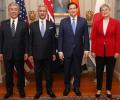
Increasing cooperation in critical minerals will top Prime Minister Modi's agenda during his discussions with leaders of Ghana, Argentinia, Brazil and Namibia.

Kerala's Electricity Minister Sunny Joseph stated that criticism regarding the state government's initial decision for a preliminary inquiry in the alleged CMRL payments case, involving former CM Pinarayi Vijayan and his family, would subside following a recent Supreme Court verdict. Health Minister K Muraleedharan also affirmed that the SC order vindicated the government's cautious approach, which prioritised a preliminary inquiry over immediate FIR registration based solely on the ED's request.
The US and India are collaborating to de-risk global supply chains for artificial intelligence technologies, particularly in semiconductor manufacturing and critical minerals processing. This partnership is facilitated through the US-led Pax Silica initiative, which aims to address over-concentration issues and single points of failure in supply chains, fostering a resilient global economy.

Prime Minister Narendra Modi and Russian President Vladimir Putin held extensive discussions to strengthen bilateral trade, defence, and energy cooperation, while also addressing the ongoing Ukraine conflict and exploring avenues for peace and resolution, with Modi reiterating India's call for dialogue and diplomacy.
